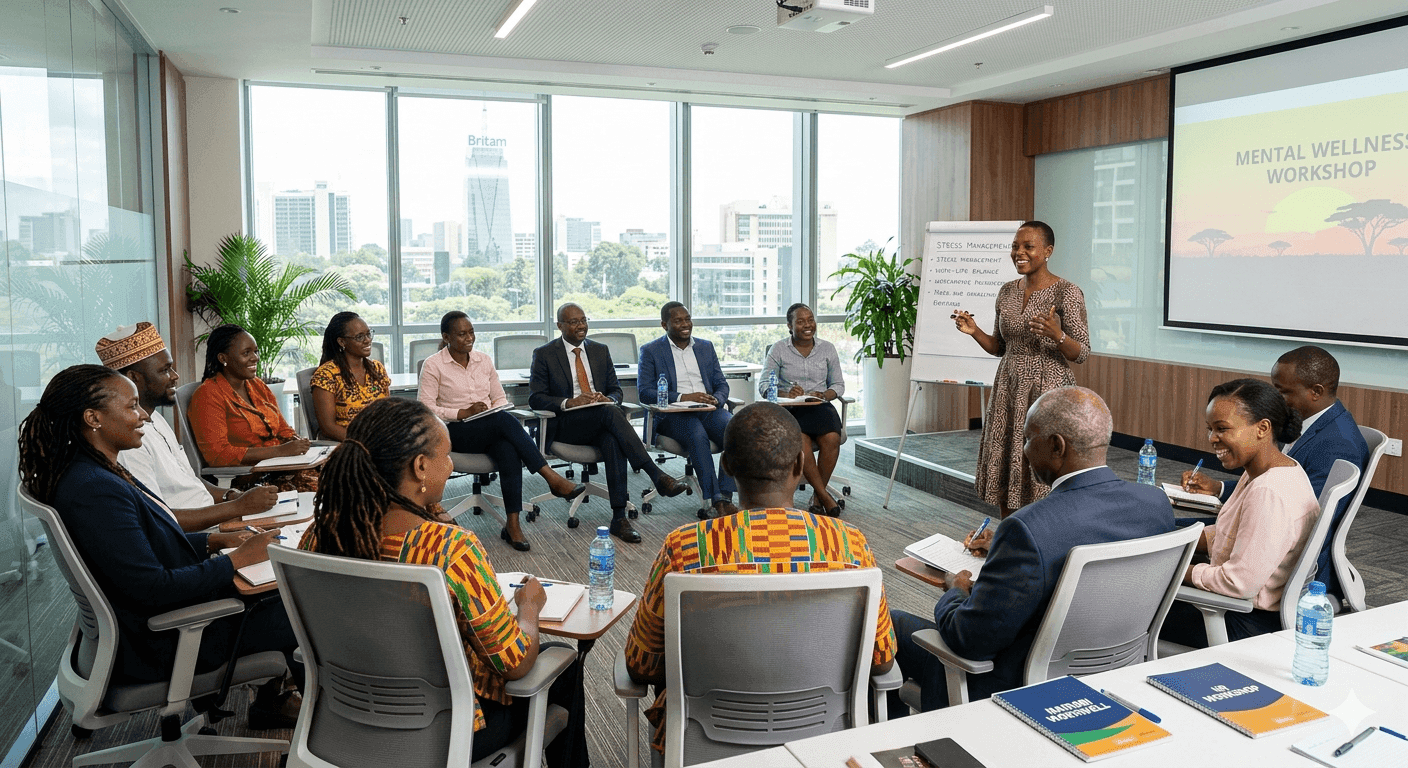
Why Mental Wellness Workshops Matter for Organizations
Organizations do not become healthier simply because people are told to take care of themselves. Mental wellness workshops create the practical foundation for awareness, resilience, and healthier workplaces.
Organizations do not become healthier simply because people are told to take care of themselves.
Healthy workplaces are built when people are given the understanding, language, tools, and support they need to recognize mental wellness challenges and respond in healthier ways. That is why mental wellness workshops matter.
They create practical opportunities for organizations to build awareness, reduce stigma, strengthen resilience, and encourage healthier communication across teams.
For many workplaces, workshops are one of the most effective starting points for improving how mental wellness is understood and supported.
What are mental wellness workshops?
Mental wellness workshops are structured educational or interactive sessions designed to help people understand emotional wellbeing, recognize challenges, and learn practical ways to cope more effectively. In organizational settings, these workshops may focus on:
- Stress management
- Burnout awareness
- Emotional resilience
- Healthy coping strategies
- Workplace communication
- Psychological wellbeing
- Mental health awareness
- Self-care practices
- Team support after difficult events
The purpose is not to replace counselling. It is to strengthen awareness, prevention, and practical response.
Why organizations need them
Many workplaces expect employees and managers to navigate emotional pressure without giving them the language or tools to do so. That creates a gap. Mental wellness workshops help close that gap by making mental health information practical, relevant, and easier to apply in everyday work life.
They build awareness
People cannot respond well to what they do not understand. Workshops help teams recognize stress, burnout, emotional strain, and other common wellbeing challenges earlier.
They reduce stigma
In many workplaces, people stay silent about what they are going through because they fear being judged, misunderstood, or seen as weak. Workshops normalize conversations around mental wellness in a professional and respectful way. That makes support-seeking more possible.
They strengthen coping skills
A good workshop should not only explain problems. It should help people leave with practical tools they can actually use. That may include:
- Stress management tools
- Grounding techniques
- Healthier emotional responses
- Communication strategies
- Recovery practices
- Boundary-setting ideas
They support healthier workplace culture
When a workplace understands mental wellness better, communication improves, empathy increases, and harmful assumptions reduce. Over time, this supports a more psychologically healthy environment.
They support prevention, not only reaction
Many organizations only respond to mental wellness challenges after morale has dropped, burnout is widespread, or a serious incident has occurred. Workshops allow organizations to build a more preventive and proactive approach.
What organizations can gain from mental wellness workshops
Mental wellness workshops can contribute to:
- Stronger awareness across teams
- Healthier conversations about stress and wellbeing
- More supportive leadership responses
- Improved resilience
- Earlier recognition of challenges
- Stronger staff support culture
- Better understanding of when professional help may be needed
They are especially valuable for organizations that want to move beyond surface-level wellbeing messaging and build real internal capacity.
Good workshop topics for organizations
Workshops should be tailored to the audience and work context. Some of the most useful topics include:
- Stress management in the workplace
- Burnout awareness and prevention
- Emotional resilience
- Psychological wellbeing at work
- Mental health awareness
- Support after difficult or critical events
What makes a mental wellness workshop effective?
A strong mental wellness workshop should be:
- Practical
- Professionally led
- Relevant to the audience
- Respectful and non-judgmental
- Interactive where appropriate
- Grounded in real workplace realities
- Focused on useful takeaways rather than theory alone
People should leave better informed and better equipped.
Workshops are not a replacement for deeper support
Mental wellness workshops are valuable, but they work best as part of a wider support system. Organizations may also need:
- Workplace counselling
- Employee support pathways
- Leadership guidance
- Crisis support
- Follow-up mental wellness services
Workshops create awareness and practical understanding. Counselling and support services help when deeper or ongoing care is needed.
Why this matters for organizations in Kenya
In Kenya, many organizations are navigating demanding work environments, changing workforce expectations, and growing awareness around mental wellness. Teams need more than general encouragement. They need practical support and relevant education that helps them respond better to real pressures.
Mental wellness workshops help organizations create that foundation. They show that wellbeing is being taken seriously, and they help move workplaces from silence and stigma toward awareness and support.
Key takeaway
Mental wellness workshops matter because they help organizations build understanding before challenges become crises.
They improve awareness, strengthen coping, support healthier communication, and contribute to more resilient workplaces. For organizations that want healthier teams and better support systems, workshops are not an extra. They are part of building a stronger working environment.
FAQs
A mental wellness workshop helps people understand emotional wellbeing, recognize common challenges, reduce stigma, and learn practical ways to cope and respond more healthily.
Yes. They help workplaces build awareness, support prevention, improve communication, and strengthen resilience across teams.
They can cover stress, burnout, emotional resilience, coping strategies, workplace wellbeing, mental health awareness, and support after difficult events.
No. Workshops build awareness and practical understanding, while counselling offers deeper and more individualized support when needed.
If your organization is planning a wellness session, team support program, or staff awareness initiative, Inner-Shift Wellness provides practical mental wellness workshops and psychoeducation sessions tailored to workplaces, schools, hospitals, NGOs, and organizations in Kenya.
Get in touch →